


 |

loading


Share to:


Solid Red Oak Entry Doors for Projects
A solid red oak front door is a sound investment if the door is built from kiln-dried stock, joined mechanically rather than stapled, and sealed with a genuine multi-coat finish. Red oak measures 1,290 lbf on the Janka hardness scale — the reference point that most other door woods are measured against — and a correctly maintained solid red oak entry can outlast the mortgage on the house. The catch: red oak's open-grain structure is less water-tolerant than white oak's, so the finish system and installation environment (covered porch or eave) do most of the heavy lifting. Buy the engineering, not just the appearance.
| Availability: | |
|---|---|
Product Description
What You're Actually Buying: Red Oak as a Material
Before comparing brands, compare the wood itself. Three numbers tell most of the story:
Property | Red Oak (Quercus rubra) | Source |
Janka hardness | 1,290 lbf (industry benchmark) | Wood Database; industry literature |
Specific gravity | ~0.63 (moderately dense) | NC State BioResources data |
Pore structure | Open-grain (porous, no natural pore plugging) | Wood Database |
Dimensional behavior | Predictable seasonal movement; needs 8–12% moisture content at build | Manufacturer spec sheets |
Why these numbers matter at the front door:
Hardness isn't just scratch resistance. It predicts how the door handles the daily abuse of keys, pets, deliveries, and the occasional dropped box. At 1,290 lbf, red oak sits comfortably above pine (~870) and fir (~660) — the species most budget doors are made from.
Open grain is a double-edged sword. It is exactly what makes red oak's cathedral and straight-grain patterns so visible after staining — and exactly why water can penetrate the end grain if the coating wears thin. The wood rewards a disciplined finishing schedule; it punishes neglect.
Density translates to mass. A 36" × 80" solid red oak leaf typically weighs 55–65 kg. That weight is a feature: better sound dampening, a solid "thunk" on close, and more resistance to forced entry than any hollow or foam-core alternative.
Red Oak vs. White Oak : Choosing the Right Species for Your Climate
This is the question buyers ask most, and the honest answer depends on where the door lives.
Dimension | Solid Red Oak | Solid White Oak |
Janka hardness | 1,290 lbf | ~1,360 lbf |
Natural moisture tolerance | Moderate — finish-dependent | High — tyloses plug the pores |
Grain expression | Bold, prominent cathedral figure | Tighter, more reserved lines |
Stain/finish response | Deep, even uptake | Can appear muted |
Relative cost | Middle tier | Higher tier |
Typical settings | Craftsman, American traditional, transitional homes | Coastal, contemporary, and high-humidity regions |
Decision rule of thumb:
Fully exposed entry, coastal or rainy climate → white oak. The natural pore plugging gives you a head start that no coating alone can fully replace.
Covered porch, eave, or sheltered entry (the majority of suburban and estate homes) → solid red oak delivers 90% of the character at a materially lower cost.
Modern/minimalist architecture → either red oak in a dark or custom color for deeper, richer tones.
No species is "wrong" if the door is engineered and finished properly — the climate exposure should drive the decision, not the showroom photo.
Engineering Checkpoints: How to Tell a 30-Year Door from a 5-Year Door
The wood species is only half the story. Run every candidate through these six checks before committing:
1. Kiln-Dried to 8–12% Moisture Content
Timber that ships at 15%+ moisture will move — cupping, twisting, or splitting seams within the first seasonal cycle. A credible manufacturer documents kiln drying to 8–12% MC and re-checks moisture at dispatch. Ask for the number in writing; vague answers ("we dry our wood well") are a warning sign.
2. Stile-and-Rail Frame, Mechanically Joined
A true exterior door is a frame (stiles and rails) with solid panels — not a single thick slab, which tends to check and crack as the center and edges expand at different rates. The joints should be adhesive plus dowels and/or screws; glue-only and staple-only assemblies fail at the corners within a few years of weather cycling.
3. A Coating Package, Not a Coat
Minimum credible exterior finish: penetrating stain → 2–3 coats of UV-resistant water-based polyurethane → sealed edges and end grain. Every edge is where moisture enters first, so a door that looks perfect from the front but raw on the edges is a door that will fail early.
4. Weather Seals on All Four Sides
Check for full-perimeter EPDM magnetic weatherstripping (the same gasket family used on refrigeration doors) and a threshold with an integrated weather seal. A gap that lets air whistle through is an energy loss and a water path — regardless of how handsome the wood is.
5. Glazing Done Right
Divided-lite doors (such as the common 2×2 four-lite layout) need double-glazed tempered low-E glass, with argon fill for cold climates. Tempered glass is a hard requirement across US (CPSC 16 CFR 1201), EU (EN 12150), and AU (AS 1288) code regimes. Replaceable glazing beads on both faces mean a broken pane costs a glass replacement, not a new door.
6. Hardware That Carries the Weight
A 55–65 kg door needs three heavy-duty stainless steel ball-bearing hinges — two is a common cost cut that leads to sagging. For residential buyers, an ANSI Grade 2 electronic deadbolt with keypad entry is the sensible security baseline, matched to the finish of the rest of the ironmongery.
Specifying for the Architecture: Design Options That Matter
The front door is the largest single element of a façade — it either answers the architecture or fights it.
Lite configuration: the 2×2 four-lite layout over a single solid panel reads cleanly from the street, floods the hall with daylight, and suits Craftsman, transitional, and modern elevations alike. Six-lite and nine-lite layouts lean more traditional; full-view glass leans contemporary.
Sidelights and transoms: widen a narrow entry and add height to low rooflines. Factory-matched units keep the grain and color continuous — site-mixing is how mismatched doors happen.
Finish direction: honey-toned natural stains for light, Scandinavian-leaning interiors; dark espresso or custom RAL colors for classic and Mediterranean elevations. Red oak accepts all of these without the blotching that plagues softer species.
Sizing: standard 36" × 80" covers most rough openings, but renovation replacements and villa builds routinely need custom widths (30"–48") and heights (78"–96"). Ordering milled-to-size (rather than trimmed-down stock) preserves the stile proportions.
What a Solid Red Oak Front Door Should Cost
Pricing varies by region, size, glass package, and hardware, so treat any headline number skeptically. What holds across markets:
Tier position: solid red oak prices above fiberglass and composite entry systems and below white oak, sapele, and walnut. You are paying for genuine hardwood mass — and the resale value that comes with it. Front-entry upgrades are consistently ranked among the highest-ROI exterior improvements in US real-estate research.
Price drivers: leaf thickness (1-3/4" standard vs 2-1/4" premium), glazing package, smart-lock hardware, custom dimensions, sidelights/transoms, and finish complexity (custom RAL vs stock stain).
The honest math: installed once, maintained every 3–5 years, a quality solid red oak door amortizes to a small annual figure against 30+ years of service.
Procurement discipline: request itemized quotes for an identical specification from at least two suppliers, and compare the specification sheets, not the totals. A lower number that downgrades the glazing, hinges, or coating is not a saving.
Maintenance: The 3–5 Year Re-Coat Cycle
Exterior red oak rewards a simple, predictable routine:
Annual inspection (5 minutes): check for bare patches on edges, bottom rail, and glazing beads — the three failure points.
Re-coat every 3–5 years (sooner on sun-facing, fully exposed entries): light sand, re-stain, two fresh coats of UV-resistant polyurethane.
Clean hardware and glass with non-abrasive products; re-lubricate hinges and lubricate the deadbolt annually.
Watch the weatherstripping: EPDM magnetic seals degrade from UV before they wear mechanically — replace as a strip, not as a whole door.
That is the entire maintenance burden. Skip it and any wood door — red oak, white oak, sapele alike — will age prematurely; honor it and the door will outlive its warranty.
Sourcing Guide: What Each Buyer Type Should Ask Before Ordering
For Homeowners
Get the supplier's moisture-content spec and coating package in writing. Ask for install photos of completed projects in your climate, not just studio renderings. Confirm the warranty covers structural defects (a 5-year structural warranty is a reasonable baseline) and clarify what it does not cover — finish, glass, and hardware exclusions are industry standard.
For Architects
Verify that the manufacturer can match your specification, not just your render: custom dimensions without stile-proportion distortion, RAL or custom color matching, sidelight/transom fabrication as matched units, and glazing that meets your local code (CPSC 16 CFR 1201 / EN 12150 / AS 1288). Ask for shop drawings — a 2-hour CAD turnaround on shop drawings is the level of service a working practice needs, and it is the difference between a door factory and a door dealer.
For Dealers & Distributors
Test the supplier's logistics, not just their brochure: export-grade crate packaging, documented moisture control at dispatch (8–12%), consistent lead times (15–30 days on custom work is typical), and a low MOQ that lets you stock test units before committing to volume. A factory that will produce a single sample door for evaluation before your first container is a factory that understands dealer risk.
For Procurement & Project Teams
Put the specification sheet into the contract: wood species and moisture range, joint construction, coating layers, glazing package, hardware grade, packaging standard, and inspection procedures (raw material, moisture, dimensions, surface, coating, final packing). Bulk programs favor suppliers with demonstrated annual capacity — for reference, established export manufacturers like Tianjin-based Waydoor cite 50,000+ doors per year with nearly 35 years in the trade — because capacity is what protects your schedule when a project accelerates.
FAQ
Is red oak durable enough for an exterior front door?
Yes, when the door is kiln-dried to 8–12% MC, mechanically joined, and sealed with a UV-resistant multi-coat finish. Under a covered entry it will comfortably serve 30+ years. On a fully exposed, salt-air coastal elevation, specify white oak instead.
Red oak or white oak for a front door — which should I pick?
White oak's tyloses give it naturally superior moisture resistance and it is marginally harder (1,360 vs 1,290 lbf). Red oak offers a bolder grain at a lower cost. Exposed site → white oak; sheltered site → red oak is the value choice.
How long does a solid red oak front door last?
With the re-coat cycle maintained (every 3–5 years), 30+ years is realistic. Structural warranties of 5 years against defects are the industry baseline.
Does the door need to be painted, or is stain enough?
A penetrating stain plus 2–3 coats of clear UV-resistant polyurethane is the standard package — paint is optional and personal. What is non-negotiable is that edges and end grain are sealed.
Can I have glass in a solid red oak door?
Yes — divided lites, single lites, sidelights, and transoms are all standard options. Specify double-glazed tempered low-E glass (argon-filled in cold climates) with replaceable beads on both faces.
How much does a solid red oak front door cost?
Region and spec dependent — the meaningful comparison is tier position: above fiberglass, below white oak and sapele. Request identical-spec quotes from two suppliers and compare specification sheets, not bottom lines.
What is a good moisture content for an exterior wood door?
8–12% at build and at dispatch. Higher figures risk warping and seam failure in service.
Can suppliers make custom-sized red oak doors?
Yes — reputable factories mill custom widths (30"–48") and heights (78"–96") to order in 5–9 weeks, without distorting stile proportions.
Product Description
Related Products

This refined arched wood door system redefines entrance design by merging classical architectural form with modern performance. As a premium solution among exterior wooden french doors, this model features a symmetrical arched top and full-height textured glass panels, creating a soft yet commanding visual statement.
Constructed as a true solid wood and glass front door, the structure combines high-grade hardwood framing with precision-fitted glass inserts, ensuring both durability and light transmission. Whether specified as exterior wooden front doors with glass for residential projects or as exterior double french doors for upscale developments, this design offers exceptional adaptability.
The curved silhouette makes it a standout curved front door solution, while its double configuration positions it among the most desirable arched double entry doors for luxury villas, boutique properties, and architect-led builds. For buyers seeking fully custom made wooden front doors, this product supports flexible sizing, wood species selection, and finish customization.
0
0

High-quality double wood entry doors with glass in mahogany, oak, or pine. Ideal for modern homes, cottages, and exterior solid wood door applications..
Whether you are upgrading front doors wooden for homes or sourcing premium wooden doors for home projects, this door system offers a versatile and high-impact entrance solution.
Whether you are upgrading front doors wooden for homes or sourcing premium wooden doors for home projects, this door system offers a versatile and high-impact entrance solution.
0
0

This solid mahogany front door features a modern double-door design with clean vertical panel lines and narrow glass inserts, striking the perfect balance between elegance and contemporary aesthetics. Crafted from premium hardwoods such as mahogany or solid oak, this custom-made door is built to last and perform well outdoors over the long term.
As one of our premium solid wood front doors, it can be fully customized in terms of size, finish, glass style and hardware, making it ideal for high-end residential entrances.
As one of our premium solid wood front doors, it can be fully customized in terms of size, finish, glass style and hardware, making it ideal for high-end residential entrances.
Black Modern Double Front Door - Sleek, Durable Entryway Solution for Contemporary Homes
Enhance your home's curb appeal with our Black Modern Double Front Door, designed for durability and modern aesthetics. Its robust construction and elegant black finish make it a perfect choice for stylish and secure entryways.
- Premium black finish for a sleek, contemporary look
- Double-door design for enhanced functionality and space
- Durable materials ensure long-lasting performance
- Ideal for modern residential and commercial properties
Upgrade your entrance with a perfect blend of style and security.
0
0


Elevate any space with our premium 2 panel doors. These solid wood interior doors prehung combine timeless design with hassle-free installation, offering a durable and stylish solution for your home renovation.
0
0
Related News
-
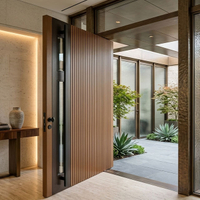 2026-08-18What Is a Pivot Door? Pros, Cons Explained
Considering a luxury pivot door? Discover the structural demands, weatherproofing risks, and design benefits before starting your custom build.
-
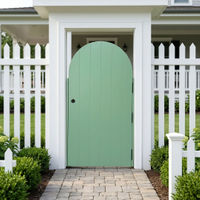 2026-08-18How To Build Arched Door with Glass?
Master custom arched door fabrication. Learn to prevent warping and leaks with expert bent lamination, curved glass, and weatherproofing.
-
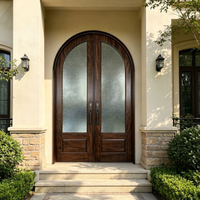 2026-08-11Arched Door Ideas for Modern Home Interiors
Planning an arched doorway? Avoid costly mistakes with this expert guide to structural framing, material selection, and flawless installation.
-
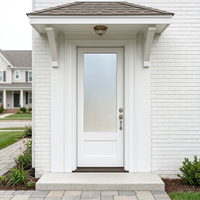 2026-07-28Solid Wood Door vs Engineered Wood Door: Which Is Better?
Solid vs. engineered wood doors: Avoid costly warping and hardware failures. Discover their structural differences to choose the perfect door.
-
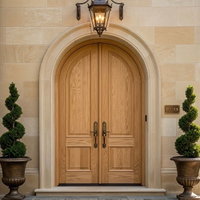 2026-08-04Arched Door Cost Guide for Custom Homeowners
Planning a custom arched door? Discover the hidden costs of curved framing, specialized millwork, and material trade-offs to budget accurately.
-
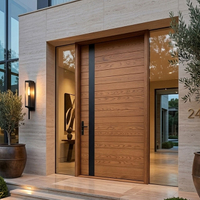
-
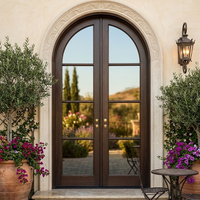 2026-07-14Custom Arched Exterior Doors: What Buyers Should Know
Specify custom arched entryways with confidence. This guide covers materials, weatherproofing, glass integration, and manufacturing for high-end homes.
-
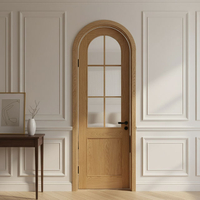 2026-07-07Modern Arched Interior Doors Design Trends 2026
Explore 2026 arched door trends. Learn about minimalist designs, material selection, installation challenges, and cost analysis for your project.


